
Websites for Retailers and Showrooms
For businesses whose real advantage is standing in the store
If your edge is a showroom people have to visit, the website has a strange job. It is not there to replace the visit. It is there to answer enough questions that somebody decides the visit is worth making.
Your website should answer the phone
Ask any showroom what questions come in by phone all day and you get the same list. Do you carry this. What does it cost, roughly. Do you install. How long does it take. Can you do something custom. Do you deliver to my area.
Every one of those is a page. When they are not on the website, your staff answer them one at a time, forever, instead of helping the customers standing in front of them.
That is the highest-return work on most retail sites, and it is unglamorous. Not a redesign, not a shop. Just writing down what you already say twenty times a week so that people arrive already knowing.
What works for a showroom
Buying guides
The questions your staff field constantly, answered properly. These also happen to be exactly what people search for, so they bring in new customers as a side effect.
What you actually carry
Not a full catalog with prices, which goes stale immediately. Enough that somebody can tell whether the trip is worth it.
The thing only you do
Custom work, in-house installation, a service a big box store cannot match. Usually the strongest thing a local retailer has and usually mentioned in one line.
Directions and parking
Sounds trivial. For a destination showroom it is one of the most-used pages on the site.
Staff can update it
Stock moves. A showroom site that only an agency can edit is wrong within a month.
Quote requests
Measuring, estimating and consultations booked from the site, so the visit is scheduled before anyone drives over.
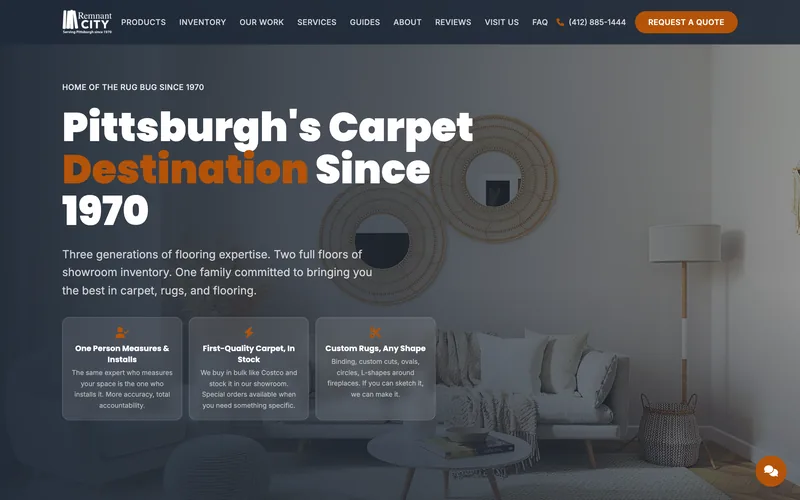
Remnant City, Pittsburgh's flooring destination since 1970
Remnant City is a family flooring business, three generations in, with two full floors of showroom.
Their advantages were the kind that are obvious in the store and invisible online. The person who measures your floor is the person who installs it. They buy in bulk so the price is right. And they will cut a custom rug in any shape you can sketch, which is the thing customers are most surprised to learn and the thing a big box store cannot match.
The site now leads with those, and a set of buying guides answers the questions the showroom was fielding by phone all day. Staff update it themselves, because a showroom website that only an agency can edit is wrong the moment stock changes.
Retail work
Live sites. Click through for what each had to solve.
Retailers and showrooms we work with
A few of the businesses whose sites we build and look after.






Retailers we work with
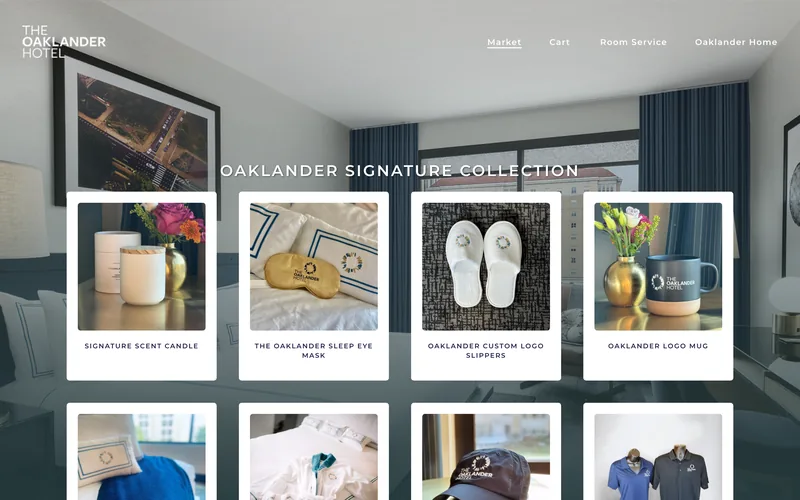
Flooring and home furnishings, kitchen and bath showrooms, specialty food, gift and candy shops, appliance and equipment dealers, and hotel retail.
If you sell something people want to see and touch before they buy, the pattern is the same whatever the product.
Getting people through the door
A showroom lives on being found locally. Your Google listing, your reviews, your hours and whether you turn up when somebody nearby searches for what you sell: that is local SEO, and it usually returns more for a retailer than anything else we do. If the site itself needs rebuilding first, that is custom website design.
F.A.Q.
Questions retailers ask
Do I need an online store?
Often not, and we will say so. If your value is a showroom, installation or custom work, a store can cost more to run than it returns. If a store genuinely fits, we build it. The honest answer depends on what you sell and how.
How do I keep it current when stock changes constantly?
By not putting a full live catalog on the site. Categories, brands, what you specialize in and what is worth coming in for stay true for months. A price list does not.
What actually brings people in?
Buying guides, consistently. They answer the questions people search for before they know which store to visit, which puts you in front of them earlier than any ad.
We have been here forty years. Does that help?
It is one of the strongest things you have, and it is usually stated once in a footer. Longevity is exactly what a customer is looking for when spending real money locally.
How much does a retail website cost?
Most run from $3,000 to $10,000 depending on how much product content and how many guides are involved. Adding a store changes the number, which is worth discussing before assuming you need one.
Tell us what you sell and what your staff get asked all day. We will come back with an honest assessment.