
Custom SaaS Development
Smile Fitter
Patients see their own new smile before they book
- Industry
- Dental software
- Location
- Pittsburgh, PA
- Visit
- smilefitter.com
Who they are
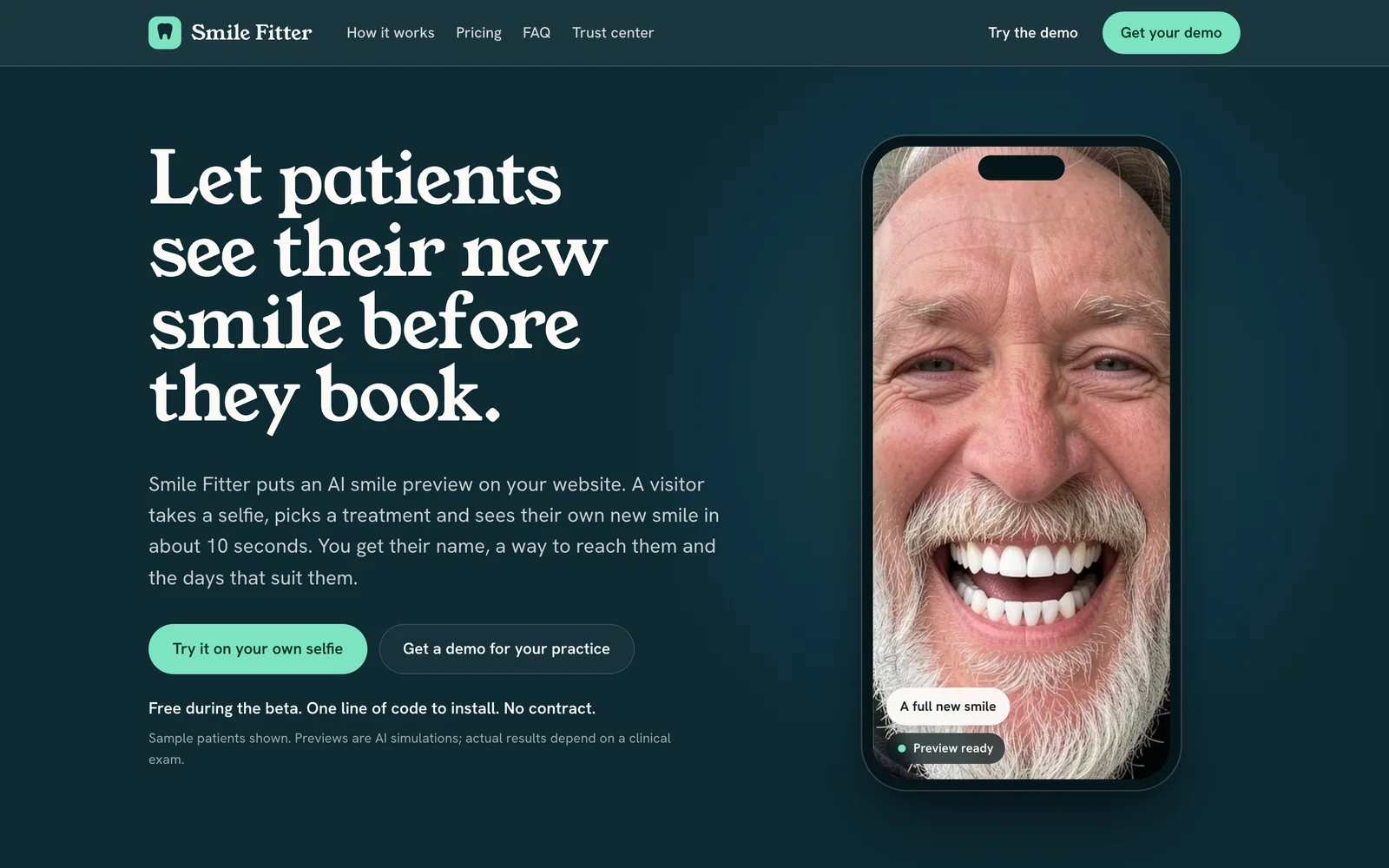
Smile Fitter is a product that our team designed, built and runs. A dental practice adds it to its own website. A visitor takes a selfie and picks a treatment, and about 10 seconds later sees their own face with the gap filled or the stains removed. The practice receives the consultation request.
We built every part of it, including the preview patients use, the dashboard where practices review their leads and the site that explains the product to practice owners, agencies and dental groups.
What they needed
Most practice websites have a before-and-after gallery, and it matters because it shows the dentist does good work. A visitor looking at strangers' smiles is still left wondering whether the treatment would work for them. The large dental brands answer that question with smile try-on tools built by in-house engineering teams, and an independent practice has no engineering team.
A preview also comes at the most sensitive moment on a dental site. A visitor hands over a photo of their face and then their name and phone number, and many practice pages run advertising and analytics tags at exactly that point. Tracking on pages like these has drawn lawsuits and regulators across US healthcare, so the tool had to be something an office manager could check and approve.
What we built
The patient side is designed for phones and needs no app or account. The camera checks framing, distance, lighting and whether teeth are showing, then takes the photo on its own. The patient chooses from the treatments the practice offers (missing teeth, a full new smile, an even gumline, whiter teeth or the best overall result) and then sees a before-and-after slider with three tooth shades that switch instantly. Every preview is labeled as an AI illustration, and patients confirm they understand that before the camera opens.
Face detection runs on the phone, and only a close-up of the mouth is sent to the AI. The edited image is color-matched and blended back into the original photo, so only the teeth and gums can change, and the full photo never leaves the device. The page runs no ad pixels or analytics, and on a practice's own site it opens in a frame that the practice's tags cannot see into.
The result appears once the patient enters a first name and a phone number or email address. A consultation request adds the days and times that suit the patient and arrives in the practice's dashboard with a status, smile photos if the patient chose to send them and the campaign tags from whichever ad brought them in. Installing the tool takes one line of code. Before that step, we build each practice a branded demo page so its team can try the tool on their own selfies.
What made the difference
Only the smile changes
The face is detected on the phone and only a close-up of the mouth goes to the AI, so the rest of the patient's photo stays exactly as it was.
No tracking where patients type
The preview page runs no ad pixels or analytics, and anyone can confirm that by watching their browser's network tab while they use it.
Tested before it goes live
Each practice gets a demo page with its own logo, doctor and hours to test on real selfies before anything is added to its website.
Need something built?
For practices that want a tool like this on a site of their own, we design and build it to fit. Custom website design
See Your New Homepage First